
How to read cash flow and upcoming bills
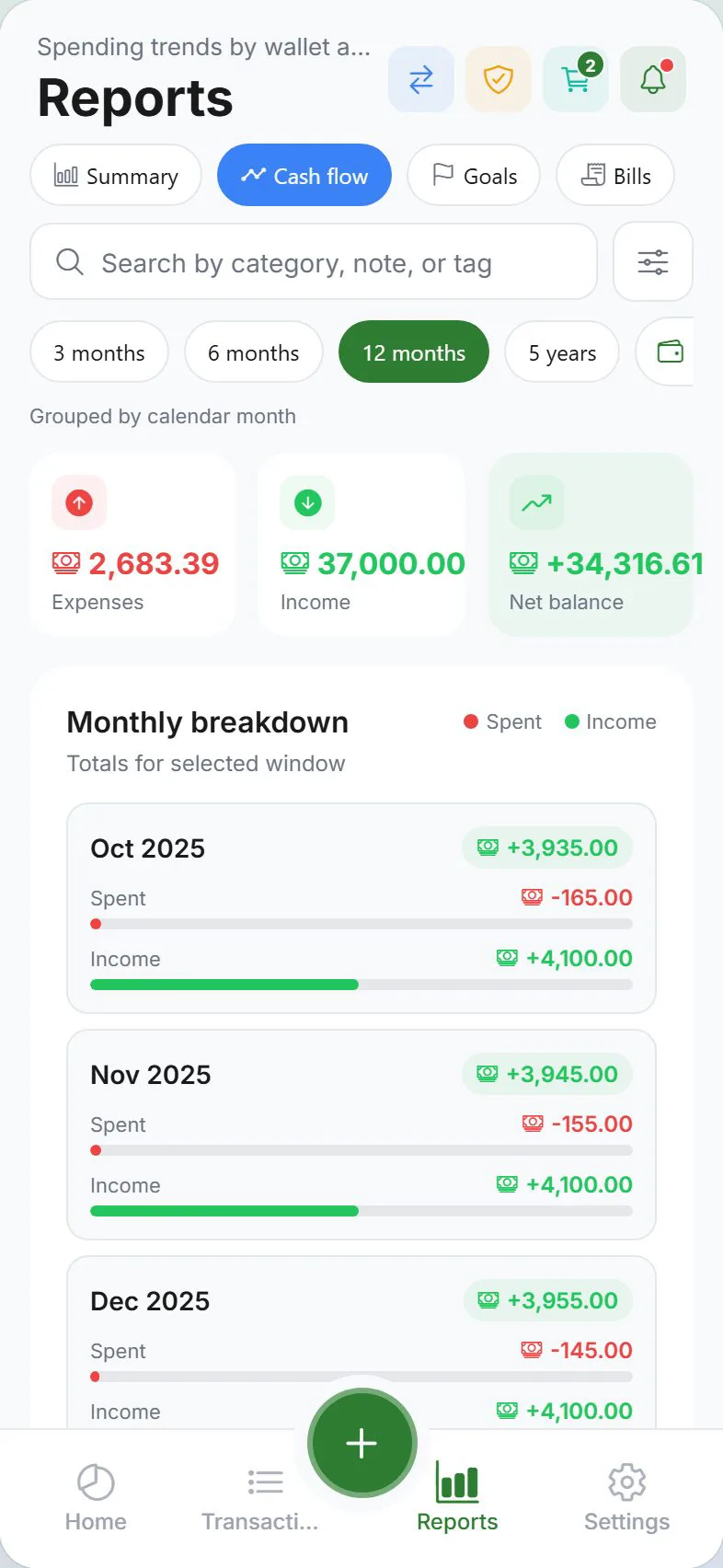
Cash flow + bills calendar.
Cash flow + bills calendar. In short: Expense Trail helps you cash flow report with manual logging on iOS, Android, and web—no bank linking, no ads on core features. Follow the steps below, then use the product docs for screen-by-screen detail.
Before you start
Log at least a week of entries so reports have data. Wallets and categories must be set up first.
Steps
Log at least 7–14 days of representative spending first.
You should see: Reports have non-empty charts.
Open Reports and pick weekly summary or cash-flow view.
You should see: Date range matches your question.
Compare category totals to your monthly budgets.
You should see: Over-budget categories stand out.
Open Bills calendar for upcoming scheduled entries if relevant.
You should see: Due dates align with cash-flow line.
Adjust budgets or logging habit—not the report math.
You should see: Next week's report reflects changes.
Common mistakes
- Reading reports with sparse data — Log daily for a week before trusting trends.
- Ignoring scheduled entries — Recurring bills affect cash-flow views; add scheduled entries.
- Wrong date on entries — Backdated expenses shift weekly summaries.
- Treating goal contributions as spending — Cash flow excludes transfers to savings goals; see the cash flow guide.
Why this approach works
Reports reward consistent logging. Weekly summaries and cash-flow views show gaps (missing days), category drift, and upcoming bills—useful only after wallets, categories, and scheduled entries exist. Cash flow + bills calendar.
Quick answer (cash flow report)
Cash flow + bills calendar. Use Expense Trail on iOS, Android, or web; core features are free without ads. You log each line manually—there is no bank feed to reconcile later.
Featured-snippet style: Cash flow + bills calendar. Expense Trail uses manual entry—add wallets and categories, follow the steps above, and review Reports weekly. No bank linking; guest mode works without an account.
Tips that stick
- Set default wallet and default category under Settings so repeat logging takes seconds.
- Log the expense the same day—memory fades and group splits get disputed.
- Once per week, open Reports and scan for empty days or categories over 80% of budget.
- Link related tasks in Learn hub instead of duplicating long product docs here.
Troubleshooting
- Totals look wrong — Search Transactions for duplicates, wrong dates, or expenses logged instead of transfers.
- Feature missing on web vs mobile — Some platform tools (widgets, geofence) are mobile-only; see platform guides.
- Still stuck — Open the product doc linked below for screen-by-screen paths; concept pages explain why wallets, categories, and budgets differ.
Related concepts
Upcoming bills and runway
Cash flow report projects inflows and outflows using scheduled entries and recent patterns—not bank balance prediction. Cross-check with Bills calendar for due dates. If cash flow looks wrong, missing scheduled rent or salary is the usual culprit.
Keep scope small
This read cash flow and upcoming bills page targets medium-competition queries—complete the steps once, then refine wallets and categories over your first month. Start with one wallet and one category, complete the steps above, then refine labels in Settings when patterns appear. Revisit Learn hub for concept pages if wallet vs category vs budget still feels unclear—they prevent the most common setup mistakes.
Frequently asked questions
Read cash flow and upcoming bills—do I need an account?
Guest mode works for local-only tracking. Sign in with Google or Apple if you need cloud sync, household, or push alerts. See use without an account.
Does Expense Trail link to my bank?
No. Expense Trail is manual entry only. You log amounts you choose; we do not pull bank transactions.
What if something looks wrong after I finish?
Check Transactions for duplicate or backdated lines. For wallet totals, use balance adjustments rather than fake expenses.
How does this compare to bank-linked apps?
Bank apps auto-import transactions but miscategorize and require credentials. Expense Trail is manual—you log on your terms. Better accuracy for people who care about splits, budgets, and privacy tiers.
Is this financial advice?
No—this guide explains product setup only. For tax, legal, or investment decisions, consult a qualified professional.